Top Stacking Chairs for Events and Offices?
Choosing the right Stacking Chairs can shape how an event feels and how an office functions. A suitable chair should support the body, save floor space, and move easily between rooms. It must also survive repeated handling, storage, and cleaning.
Furniture-design authority Charles Eames offered a useful standard: “The role of the designer is that of a very good, thoughtful host anticipating the needs of his guests.” That idea fits modern seating decisions. Guests notice wobbling frames, narrow seats, sharp edges, and difficult movement. Staff notice heavier loads, unstable stacks, and scratched floors. Small details matter.
This guide compares top Stacking Chairs for events and offices through practical criteria. We examine frame strength, seat comfort, stack height, weight, transport, and surface maintenance. Materials matter too. Powder-coated steel may resist daily wear, while polypropylene can simplify cleaning and reduce visual clutter. Upholstered models feel warmer, but they require more care.
No chair wins every room. A lightweight model may be ideal for conference setups, yet feel less substantial in a busy training center. A padded chair may improve comfort, but consume more storage space. My own assessment would remain cautious without testing each model on real flooring. Product specifications rarely reveal everything.
The best choice balances comfort, durability, appearance, and handling. It should work at 9 a.m. and after the final event. That is the real test.
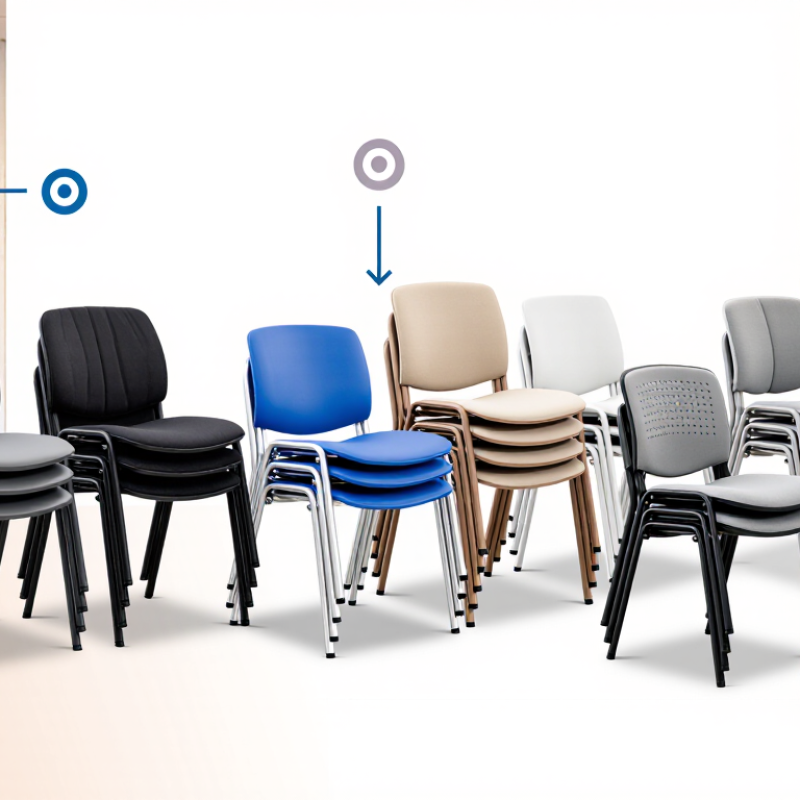
What Makes a Stacking Chair Suitable for Events and Offices
A suitable stacking chair must handle movement, storage, and repeated use without feeling temporary. In my experience, event chairs need stable frames, comfortable seats, and surfaces that resist quick scuffs. Offices need those features too, but comfort matters more during longer meetings. A chair that stacks neatly may still feel rigid after one hour.
Check the chair’s weight capacity, balance, and stack height before ordering. Wider feet can improve stability on uneven floors. Protective glides help prevent scratches on wood, tile, and polished concrete. Look for a seat with gentle support, not just a thin cushion. Materials should also be easy to wipe after coffee spills or dusty setup work. These details sound small. They affect daily reliability.
Tips: Test several chairs in the actual room. Stack them fully and move the pile through doorways. Sit for thirty minutes, then inspect the back and seat pressure. Leave enough storage space for safe handling. Ask for maintenance guidance and replacement parts before purchase. I once focused too much on appearance and overlooked noisy metal contact during stacking. That mistake mattered in quiet office settings. For busy venues, avoid chairs that are difficult to lift or that require awkward twisting. A practical chair should save staff effort, not create another task.
Key Chair Types and Materials for Different Workplace Needs
Choosing stacking chairs starts with workplace activity, not appearance. In office fit-outs, I often see teams select one chair for every room. That approach usually fails.
For training rooms and temporary meeting areas, polypropylene chairs offer light weight, impact resistance, and simple cleaning. Perforated backs can improve airflow during long sessions. Steel frames add stability, while aluminum frames reduce lifting strain. However, thin plastic seats may feel hard after several hours. That detail is easy to miss. The 2023 American Time Use Survey from the U.S. Bureau of Labor Statistics recorded about 8.8 hours spent at work on an average workday. A chair used for that long needs more than easy storage.
Task-focused offices require different support. Choose chairs with adjustable seat height, back support, and suitable seat depth. Upholstered chairs may improve comfort, but fabric can retain dust and stains. Mesh backs can support ventilation, yet damaged mesh is difficult to repair neatly. NIOSH ergonomic guidance emphasizes neutral posture and adjustability, especially when users share equipment. Nesting or ganging features also help convert spaces quickly, though locking mechanisms need routine inspection.
Material choices should reflect cleaning schedules, user turnover, and floor conditions. Powder-coated steel suits frequent movement, but exposed edges can mark floors. Wood adds warmth to executive or reception areas, but moisture control matters. The 2024 Global Workplace Survey by the Gensler Research Institute highlights continuing demand for varied work settings. Still, flexibility is not automatically better. Poorly planned storage can block exits and create daily frustration. Test several chair types with real users before purchasing. Voices from shorter and taller employees are often overlooked.
Best Stacking Chair Features for Event Setup and Storage
Stacking chairs for events and offices should make setup faster, not create another problem. In my experience, the best designs balance weight, stability, comfort, and storage efficiency. A chair should lift easily with one hand, yet remain steady on uneven floors. Look for a reinforced frame, smooth edges, and a seat that supports long meetings without excessive pressure.
Stacking height matters.
Chairs with aligned legs form safer, tighter piles. This reduces wasted floor space behind a meeting room or stage. A stable stack should not lean when six or eight chairs are placed together. Check the recommended stacking limit before buying. Do not rely on appearance alone. A chair cart can also reduce lifting strain and protect floors during event changes. Locking casters are useful, but they should move smoothly and stop securely.
Materials affect daily maintenance. Powder-coated metal usually handles frequent use, while molded seating can resist spills and quick cleaning. Fabric may feel warmer, but it needs more care after crowded events. I once chose comfort over stackability, and storage became unnecessarily difficult. That mistake still influences my checklist. Test the actual chair with a table, cart, and storage corner. Small gaps between stacked chairs can consume surprising space. Review weight capacity, replacement parts, cleaning instructions, and warranty terms in the product documentation. Reliable setup depends on details that are easy to overlook.
Choosing the Right Stacking Chair for Your Space and Budget
Choosing the right stacking chair starts with your room, not its appearance. Measure aisle widths, storage corners, and table height before comparing prices. A chair that stacks neatly may still block a fire exit or crowd a narrow walkway. For training rooms, look for a stable frame, a supportive back, and a seat that remains comfortable after several hours. In offices, lighter chairs can simplify daily rearrangement, while heavier frames may feel more secure in busy meeting areas.
Budget should include more than the purchase price. Check the chair’s weight, cleaning requirements, warranty terms, and replacement-part availability. A low-cost seat can become expensive if its glides crack or its fabric stains easily. Polypropylene or coated surfaces usually suit cafeterias and event halls because spills wipe away quickly. Upholstered seats may feel warmer, but they need more careful maintenance. Test a sample on the actual floor. Wheels, polished concrete, and carpet can change how a chair moves.
Practical evaluation
I have found that comfort is difficult to judge from a product photograph. Sit for fifteen minutes, stack several chairs, and lift the full stack safely. Ask staff to repeat the task. Their feedback often reveals awkward handles or sharp edges. Do not trust every specification blindly; confirm dimensions and load ratings with the supplier. I once prioritized a compact stack height and regretted the reduced back support. That mistake taught me to balance storage efficiency with real human use. Some spaces need elegance, but most need chairs that remain dependable on an ordinary Tuesday.