China Top 10 Portable Solar Panels for Camping Suppliers
Choosing among China’s top portable solar panel suppliers requires more than comparing wattage on a product page. For campers, real performance depends on sunlight, packing space, weather resistance, and charging compatibility. A 200-watt panel may look impressive, yet it can underperform under tree cover or cloudy mountain conditions. This guide examines suppliers of Portable Solar Panels For Camping through practical details, including panel efficiency, folding size, ETFE surface protection, USB-C output, MC4 compatibility, controller quality, warranty terms, and documented safety certifications.
Solar educator Will Prowse expresses the central principle clearly: “A solar panel is only useful when it is in the sun.” That simple observation matters beside a tent, where shadows move quickly across the ground. Experienced campers should also check cable length, kickstand stability, connector strength, and the panel’s weight before ordering. Small design flaws become frustrating after several hours outdoors.
The suppliers featured here are not presented as universally perfect. Some offer stronger prices, while others provide better testing records or customization support. Claims still require verification. Product specifications can change. Independent samples may perform differently from promotional results. Buyers should request updated datasheets, factory inspection evidence, sample testing, and clear after-sales policies. Pay attention to conversion efficiency, rated power, operating temperature, and protection against moisture. A reliable supplier should answer technical questions directly, without hiding behind vague marketing language.
This comparison aims to make procurement more practical. It considers both factory capability and camping experience, helping readers identify panels that can charge power stations, phones, cameras, and essential lighting during outdoor trips.
Portable Solar Panels for Camping: Product Overview and Applications
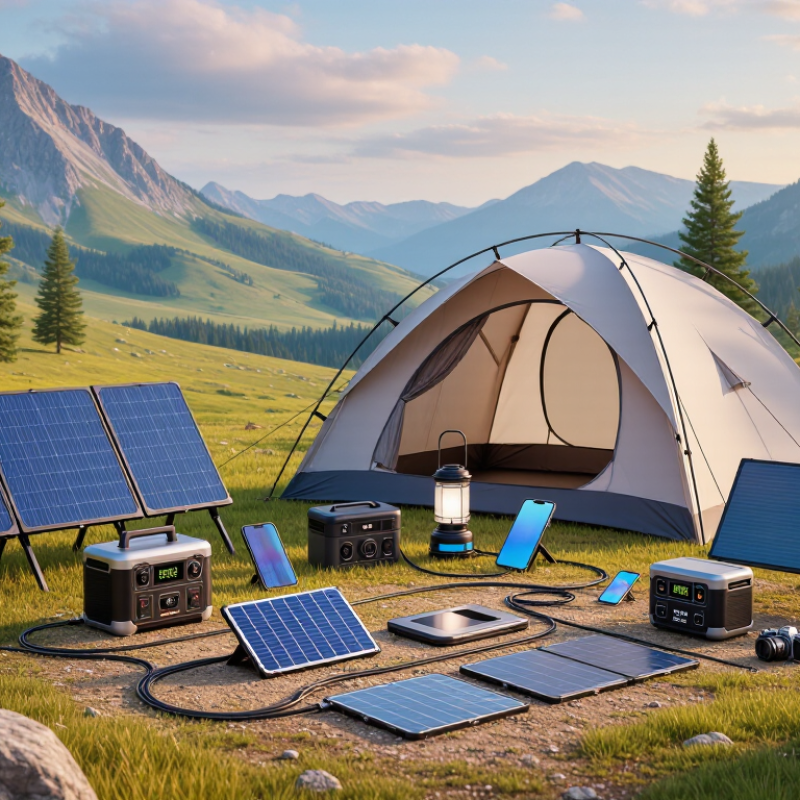
Portable solar panels for camping turn sunlight into practical power for phones, lights, GPS units, and small medical devices. Most folding models use monocrystalline cells because they provide strong output within a smaller surface area. A 100-watt panel may produce about 55 to 80 watts in clear midday conditions. Real output falls with clouds, heat, dust, and poor positioning. That difference matters.
China’s leading camping-panel suppliers commonly provide models from 20 to 200 watts. Smaller panels fit daypacks and support emergency charging. Larger folding systems can charge power stations for cooking equipment, cameras, or compact refrigerators. Useful features include USB-C ports, regulated USB-A outputs, waterproof fabric, reinforced hinges, and adjustable stands. A built-in kickstand helps, but weak legs can fail on gravel. I have seen this problem repeatedly.
Application depends on the campsite and the user’s routine. A weekend hiker may need only a lightweight 30-watt panel. A family campsite may require 120 watts or more, especially when several devices charge together. Check the panel’s open-circuit voltage before connecting it to a battery system. Compatibility prevents overheating and charging interruptions. Supplier documentation should state test conditions, efficiency, connector types, warranty terms, and water-resistance ratings. Some product sheets sound precise, yet omit shade performance. That omission deserves attention. Folded dimensions also need careful checking, because a panel can look portable online but feel bulky beside a tent.
How to Evaluate Chinese Portable Solar Panel Suppliers
China Top 10 Portable Solar Panels for Camping Suppliers
Evaluating Chinese portable solar panel suppliers requires more than comparing prices. Check the supplier’s factory profile, production capacity, and years serving outdoor power markets. Ask for clear specifications, including rated wattage, operating voltage, panel efficiency, folded size, and weight. A reliable supplier should provide recent test reports and explain how performance is measured. Do not trust impressive numbers without testing conditions.
Request a sample before placing a larger order. Test it beside a tent under changing sunlight, then record output every hour. Inspect the connectors, stitching, handle, surface coating, and folding hinges. These small details often reveal manufacturing quality. Ask about warranty handling, replacement parts, packaging, and delivery inspection procedures. Communication matters too. Slow or vague replies may create problems after payment. I once treated low pricing as the main advantage; that judgment was incomplete. Field durability deserved more attention.
Tips: Compare at least three suppliers using the same checklist. Confirm whether the quoted wattage reflects laboratory output or practical outdoor performance. Review customer feedback carefully, but remember that some reviews may lack technical detail. Ask for a live video of the production line and a close view of quality-control checks. A factory visit can help, though it is not always possible. Keep written records of every specification and promise. Small misunderstandings become expensive later. Testing is imperfect, but it exposes weak claims early.
Top 10 Chinese Suppliers of Portable Solar Panels for Camping
China’s portable solar supply base is broad, but quality varies sharply. This review selects ten Chinese suppliers for camping panels using measurable criteria: conversion efficiency, folded size, output stability, certification, warranty support, and production experience. The IEA PVPS Trends 2024 report recorded 456 GW of new global photovoltaic capacity in 2023. China contributed more than half of that growth, showing its manufacturing scale and technical depth.
For campers, supplier selection requires more than a high wattage claim. The shortlisted companies should provide panels tested under IEC 61215 and IEC 61730 requirements, with clear temperature coefficients and power tolerances. Durable ETFE surfaces, reinforced hinges, waterproof junction boxes, and compatible connectors matter beside a cold tent. A 100W panel may weigh over five kilograms, so packaging design affects real usability. Many suppliers also offer foldable monocrystalline units, USB-C outputs, and customized cable lengths.
The ranking is not flawless. Public data rarely separates camping panels from broader photovoltaic products, and factory claims need independent verification. Buyers should request recent test reports, sample units, factory audit records, and warranty terms before placing an order. China’s National Energy Administration reported 216.88 GW of newly added photovoltaic capacity in 2023, supporting confidence in the country’s production ecosystem. Still, a supplier with lower stated efficiency may perform better outdoors if its temperature control, quality inspection, and after-sales response are stronger. Field testing remains necessary.
This chart compares common rated-power classes found in portable solar panels supplied for camping and outdoor use in China. Smaller panels are typically designed for phones and compact power banks, while higher-output models are intended for portable power stations and longer off-grid stays.
Comparison of Panel Efficiency, Portability, Durability, and Pricing
When comparing China’s top ten portable solar panel suppliers for camping, efficiency should be measured under consistent conditions. The IEA PVPS Trends 2024 report notes that mainstream crystalline-silicon modules commonly exceed 20% efficiency. Portable products usually advertise around 20–23%, but real output falls under shade, dust, and high temperatures. NREL data shows silicon modules can lose roughly 0.3–0.5% output for each degree above standard testing temperature. A panel beside a hot tent may therefore produce less than its label suggests.
Portability depends on more than folded size. A 100-watt panel weighing 4–6 kilograms is manageable for car camping, but awkward on a long trail. Look for reinforced handles, protected hinges, and a cable length that reaches the battery without stretching. Durability needs evidence. Suppliers should provide testing aligned with IEC 61215 and IEC 61730, plus clear water and dust resistance ratings. IP65 protection is useful for rain, but it does not excuse careless storage. Real field use is harsher than a laboratory.
Pricing varies with cell type, construction, controller quality, and shipping terms. In a 2024 retail sample, portable 100-watt panels commonly appeared near 0.8–1.8 dollars per rated watt, before regional taxes and accessories. That range is not fixed. A cheaper panel may carry a heavier frame or weaker connectors. I would request measured power data, warranty conditions, and temperature tests before selecting a supplier. One overlooked detail: foldable fabric panels save space, yet their seams can age faster than rigid frames. Procurement decisions still need field verification.
Tips for Choosing a Reliable Camping Solar Panel Supplier
Choosing a reliable camping solar panel supplier in China requires more than comparing catalog prices. Start with technical evidence. Request power test results, material specifications, waterproof ratings, and clear warranty terms. A trustworthy supplier should explain performance under cloudy skies, not only under perfect sunlight. Ask whether the stated wattage reflects laboratory conditions or practical outdoor use.
Tips: Request a sample before placing a bulk order. Test it beside a tent at noon and again in weak afternoon light. Check the connector temperature, folding hinges, cable length, and charging stability. The panel should remain steady when a light wind moves the fabric. Small details matter.
Review the supplier’s production experience, quality-control process, and export documentation. Factory photographs are useful, but independent inspection records are stronger evidence. Confirm that each batch receives electrical safety testing and that serial numbers support traceability. A dependable supplier answers technical questions directly and admits product limitations. That honesty is valuable.
Do not rely on the cheapest quotation. Very low prices may hide thinner wiring, weaker protective layers, or inconsistent output. I have seen specifications look impressive while field performance remained disappointing. That possibility deserves attention. Discuss replacement parts, packaging strength, delivery schedules, and after-sales response times before ordering. A written agreement should define tolerances, inspection standards, and remedies for defective units.
