
China Best Gaming Chairs Suppliers for Global Buyers?
Choosing reliable Gaming Chairs suppliers in China requires more than comparing catalog prices. Global buyers need stable quality, clear communication, and dependable export support. A chair may look impressive online, yet its foam density, tilt mechanism, and stitching can differ in real use. This gap deserves careful attention.
This guide explores how international buyers can assess Chinese manufacturers with greater confidence. It considers factory experience, product certifications, material selection, production capacity, and quality control procedures. Practical details matter. Ask for frame samples, load-test records, carton dimensions, and replacement-part policies. A serious supplier should explain these points clearly. Product photos alone are not enough.
Pricing also needs a wider view. Freight costs, packaging strength, warranty terms, and after-sales response can change the final value. A low quotation may become expensive after damaged shipments or inconsistent batches. No supplier is perfect. Even experienced factories may face delays during busy seasons or need improvement in communication. That reality should be discussed openly, not hidden behind polished sales language.
The following sections will help global buyers compare suppliers, verify factory capabilities, and reduce avoidable purchasing risks. They will also examine private labeling, sample approval, order minimums, and delivery planning. Reliable sourcing takes patience. It also requires honest questions, written specifications, and documented inspections. With a practical evaluation process, buyers can find Gaming Chairs suppliers that support long-term business relationships rather than one-time transactions.
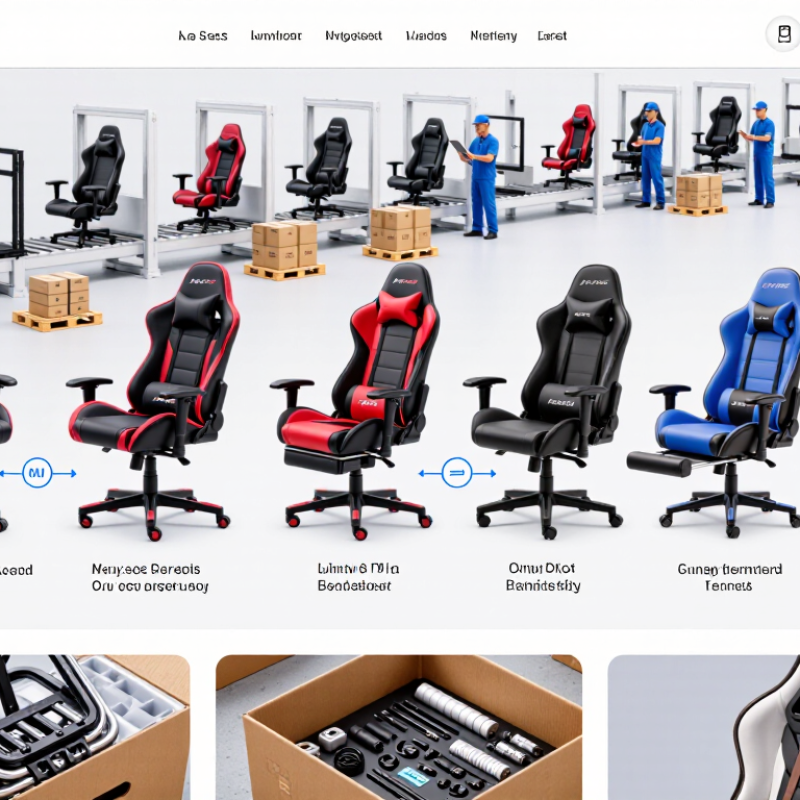
Gaming Chair Manufacturing in China: An Industry Overview
China’s gaming chair manufacturing sector has grown from general office seating production. Many factories now operate cutting, stitching, foam molding, welding, and assembly lines under one roof. According to the General Administration of Customs, China’s furniture exports reached roughly US$75 billion in 2023. This scale supports flexible sourcing, but it does not guarantee equal quality.
Market demand is also expanding. Grand View Research estimated the global gaming chair market at about US$1.7 billion in 2023. It projects continued growth through 2030, supported by home gaming and streaming. Chinese suppliers commonly offer PU leather, breathable mesh, adjustable armrests, and reclining mechanisms. Frame thickness, foam density, tilt testing, and carton protection deserve closer inspection. Small details matter. A chair may look impressive in photographs but feel unstable after repeated use.
Reliable buyers should request factory audit records, material specifications, load-test results, and pre-shipment inspection reports. ISO 9001 systems can indicate process control, although certification alone proves little about daily workmanship. Sample testing should include noise, caster movement, stitching strength, and gas-lift performance. Production schedules also need written confirmation because custom colors and packaging can delay shipment. The China National Furniture Association has repeatedly emphasized quality upgrading and intelligent manufacturing in industry reports. Still, some suppliers provide incomplete test data. That weakness should be treated seriously, not politely ignored. A transparent factory explains defects, tolerances, and replacement procedures before receiving an order.
| Evaluation Dimension | Typical Industry Data | What Global Buyers Should Check | Reference or Verification Basis |
|---|---|---|---|
| Manufacturing Scope | Chinese factories commonly provide OEM and ODM production for racing-style, ergonomic, fabric, mesh, and office-gaming chairs. | Confirm whether the factory performs cutting, sewing, upholstery, assembly, inspection, and packaging in-house or through subcontractors. | Factory audit, production-flow review, and sample inspection. |
| Common Product Materials | Typical materials include PU leather, PVC leather, polyester fabric, mesh, steel frames, molded foam, plywood, nylon, and aluminum components. | Request material specifications, thickness, density, abrasion data, hydrolysis performance, and chemical-test reports where applicable. | Material datasheets, laboratory reports, and approved pre-production samples. |
| Foam Construction | High-density molded or cut foam is widely used for seat cushions, backrests, and side bolsters. | Verify foam density, hardness, compression recovery, dimensional stability, and consistency between production batches. | Supplier technical sheet and independent sample testing. |
| Adjustable Functions | Common functions include height adjustment, reclining backrests, tilt mechanisms, adjustable armrests, rocking functions, and removable cushions. | Check adjustment ranges, locking positions, mechanism durability, noise, wobble, and compatibility with the intended user-weight range. | Functional inspection, engineering drawings, and durability-test records. |
| Recommended Safety Standards | International buyers may specify ANSI/BIFMA X5.1, EN 1335, or other market-specific seating requirements. | Specify the exact standard, test method, product configuration, and load requirement in the purchase contract. | ANSI/BIFMA X5.1 and EN 1335 are recognized office-chair safety and performance standards. |
| Chemical Compliance | Products sold in many international markets may require controls for restricted substances, including requirements associated with REACH or RoHS. | Confirm the destination market, applicable restricted-substance limits, component coverage, and validity of test reports. | EU REACH and RoHS regulatory frameworks; verify current legal applicability for the product and market. |
| Quality Management | Factories may operate documented quality systems based on ISO 9001 principles, although certification status differs by supplier. | Ask for a current certificate, certification scope, issuing body, corrective-action records, and inspection procedures. | Certification verification through the issuing certification body. |
| Typical Minimum Order Quantity | Indicative: 50–500 units per model | MOQ depends on upholstery material, color, packaging, customization, tooling, and whether the item is a standard catalog model. | Commercial quotation and written MOQ confirmation from each factory. |
| Prototype and Sample Stage | Customized products generally require design confirmation, sample approval, and a pre-production sample before mass production. | Approve dimensions, materials, color, logo placement, carton artwork, assembly instructions, and packaging before signing off. | Golden sample, signed specification sheet, and approved artwork. |
| Indicative Production Lead Time | Indicative: 30–60 days after sample and deposit approval | Allow additional time for new tooling, imported components, peak-season capacity, inspections, and shipping preparation. | Factory production schedule and purchase-order lead-time clause. |
| Packaging Options | Export packaging commonly uses corrugated cartons, molded foam or protective inserts, plastic bags, and palletization when required. | Check carton dimensions, drop-test performance, moisture protection, stacking strength, packaging compression, and container utilization. | Packaging specification, trial packing, and pre-shipment inspection. |
| Container Planning | Gaming chairs are often shipped disassembled or partially assembled to reduce volume and improve container efficiency. | Request packed dimensions, net and gross weight, cartons per container, loading plan, and spare-parts ratio. | Packing list, verified carton measurements, and loading simulation. |
| Export Documentation | Standard export documentation may include a commercial invoice, packing list, bill of lading, certificate of origin, and customs classification information. | Confirm destination-country import rules, product labeling, tariff classification, wooden-packaging requirements, and document responsibilities. | Buyer’s freight forwarder, customs broker, and destination-country regulations. |
| Inspection Stages | Common controls include incoming-material inspection, in-process inspection, final random inspection, and container-loading inspection. | Define acceptable quality limits, defect categories, sampling level, inspection checklist, and remedies for nonconformity. | Agreed inspection standard, approved sample, and independent inspection report. |
| After-Sales Support | Common replacement parts include casters, gas lifts, armrests, bases, mechanisms, cushions, and hardware kits. | Request a parts list, warranty terms, response time, replacement procedure, and recommended spare-parts percentage. | Written warranty policy and spare-parts agreement. |
| Supplier Selection Priority | For global buyers, the strongest supplier profile combines stable quality, transparent specifications, verified capacity, responsive communication, and reliable export execution. | Use a weighted scorecard covering product quality, compliance, price, MOQ, lead time, communication, inspection results, and total landed cost. | Buyer due diligence, factory audit, sample comparison, and total-cost analysis. |
Related Posts
-

2026 Top Restaurant Booths Trends for Global Buyers?
-
Why Are Gaming Chairs Essential for Ultimate Comfort?
-
China Best Chair Styles for Every Home Decor Need?
-
What Is the Best Type of Banquette Seating in 2026?
-
Why Choose Outdoor Chairs for Your Home and Garden?
-

China Best Restaurant Chairs Manufacturers and Suppliers